





here's the science & math of it.
the science
No BS. No Greenwashing. Just Science.
Humans are burning fossil fuels (oil, gas & coal) for our homes, offices, factories and transport. When these burn, they release greenhouse gases - mostly carbon dioxide (CO2). These gases trap the Sun's heat and cause the planet's temperature to rise.
We're burning more fuels than ever before and the planet is heating up faster than it ever has.
This is causing rapid changes in the climate which left unchecked, will cause catastrophic damage. Destructive cyclones, massive floods, long droughts, forest fires, a rise in sea levels that will drown island nations & coastal cities. And also a mass extinction of millions of species.
This is threatening our lives as well as our livelihoods. Hence, the term crisis. The climate crisis.
(More: A simple guide on climate change).
A carbon footprint is the total amount of greenhouse gas emissions that come from the production, use and end-of-life of a product or service. It includes carbon dioxide — the gas most commonly emitted by humans — and others, including methane, nitrous oxide, and fluorinated gases, which trap heat in the atmosphere, causing global warming. It's typically measured in kilos or tonnes of CO2e or "carbon dioxide equivalent".
In our case, the carbon footprint is the quantified environmental cost of making and shipping clothes.
Carbon offsets allow individuals and companies to invest in environmental projects around the world in order to balance out their own carbon footprints. You can invest in reforestation, solar power, wind energy, bio-gas, etc - activities that avoid, reduce or remove CO2 from the air.
At its core, an offset is an accounting mechanism. It’s a way of balancing the scales on pollution.
In this climate fight, the first step is always to reduce, reduce, reduce our CO2 emissions as much as possible. So here's what we've got going:
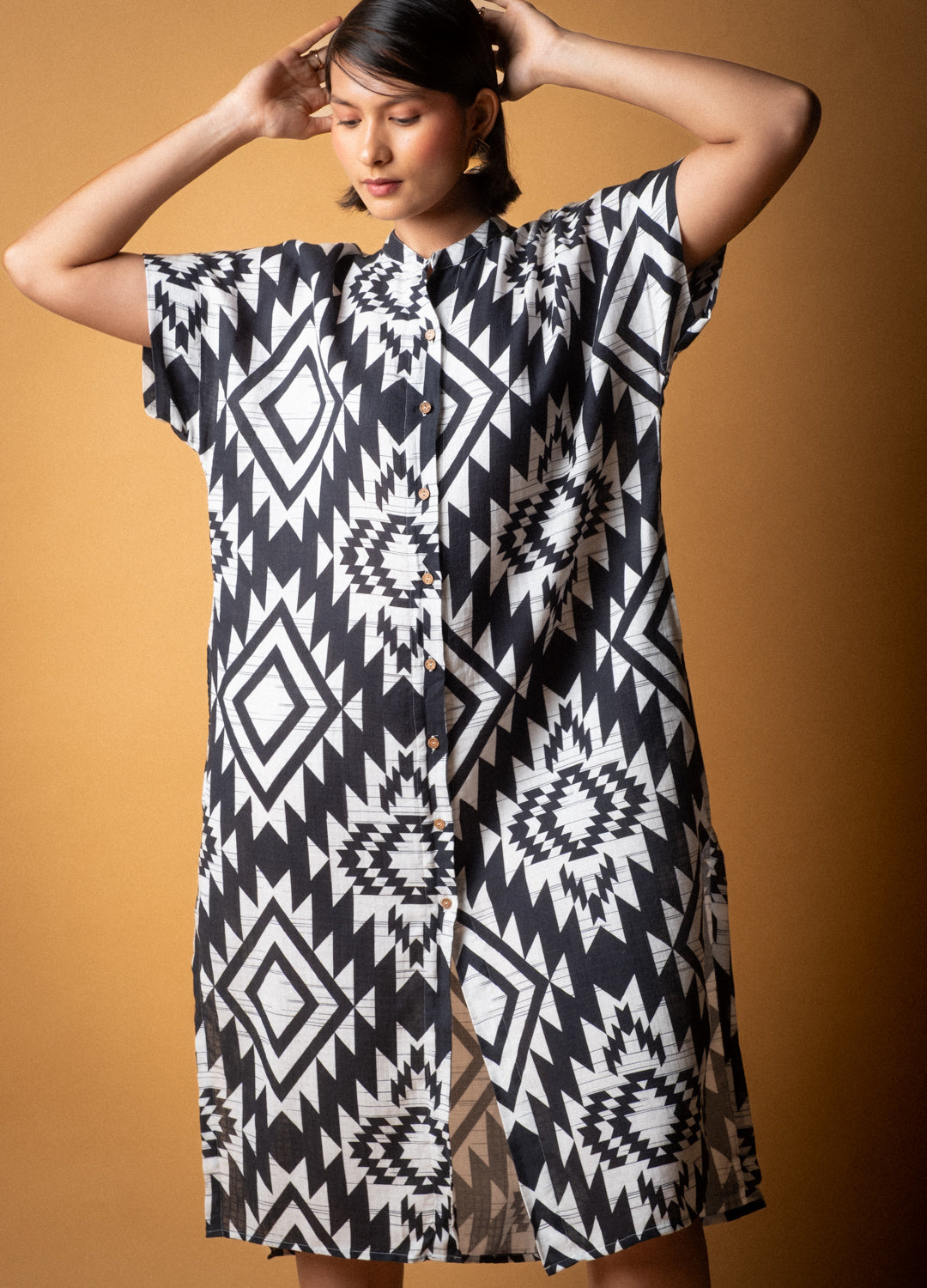
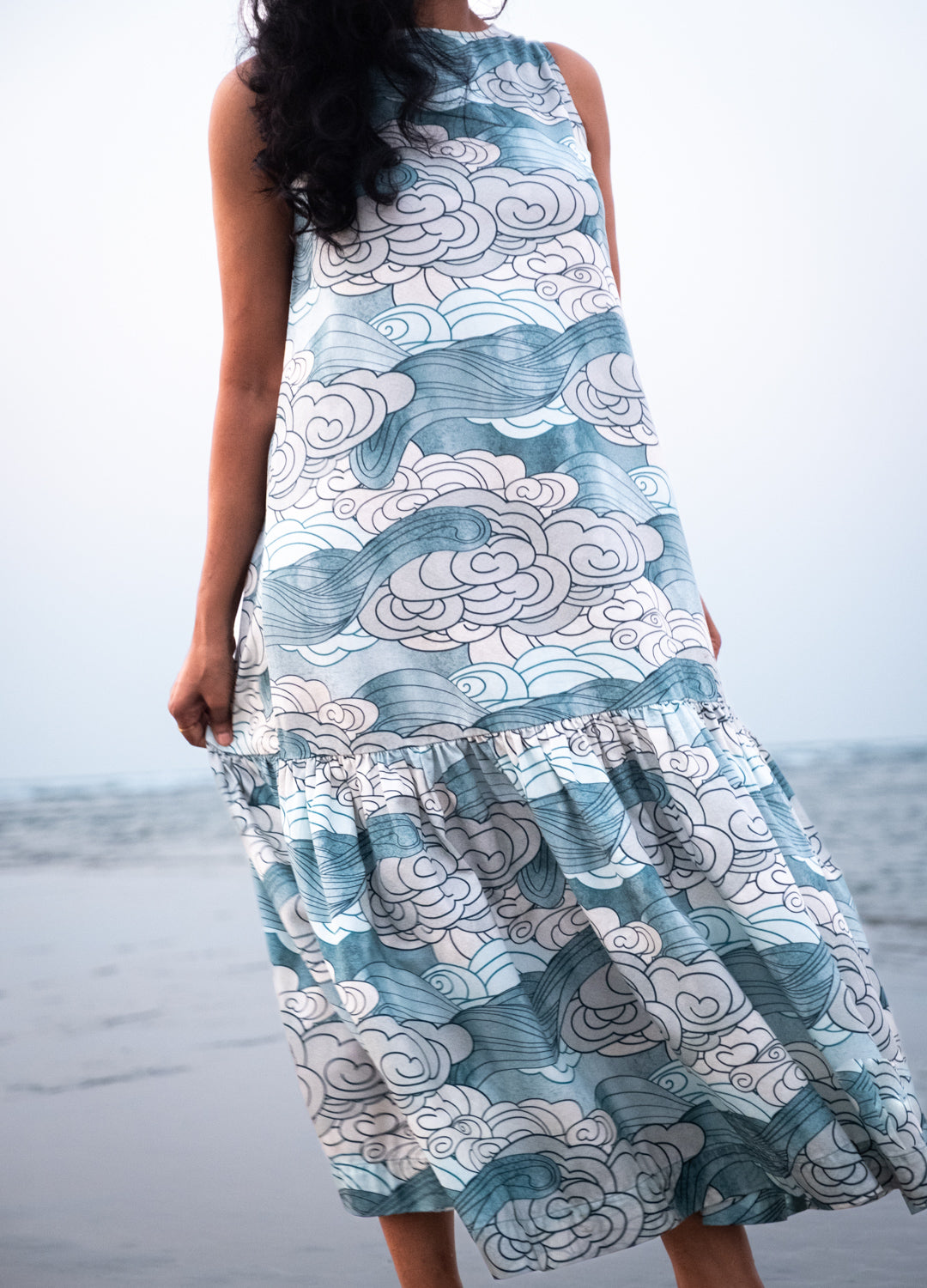
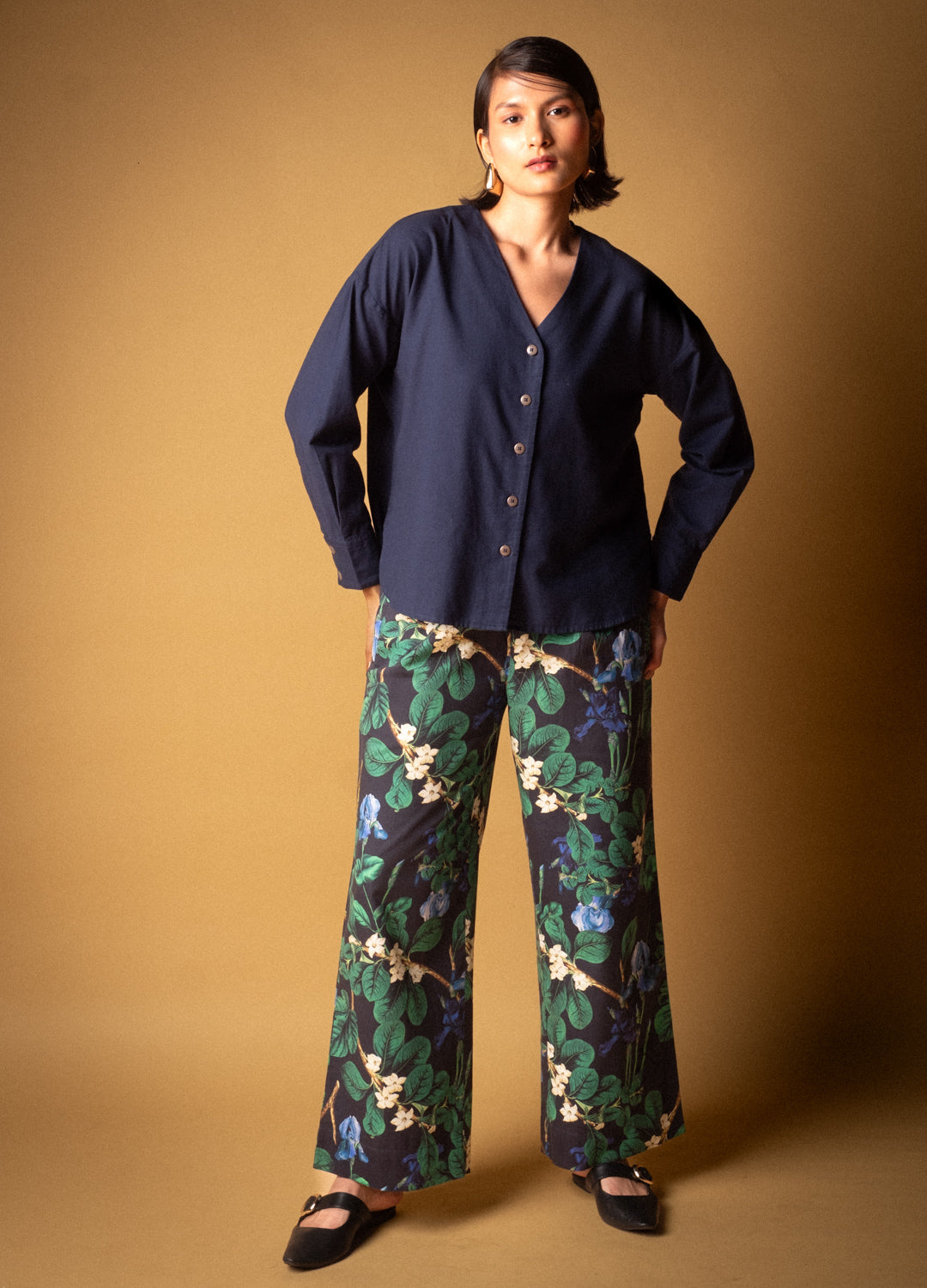
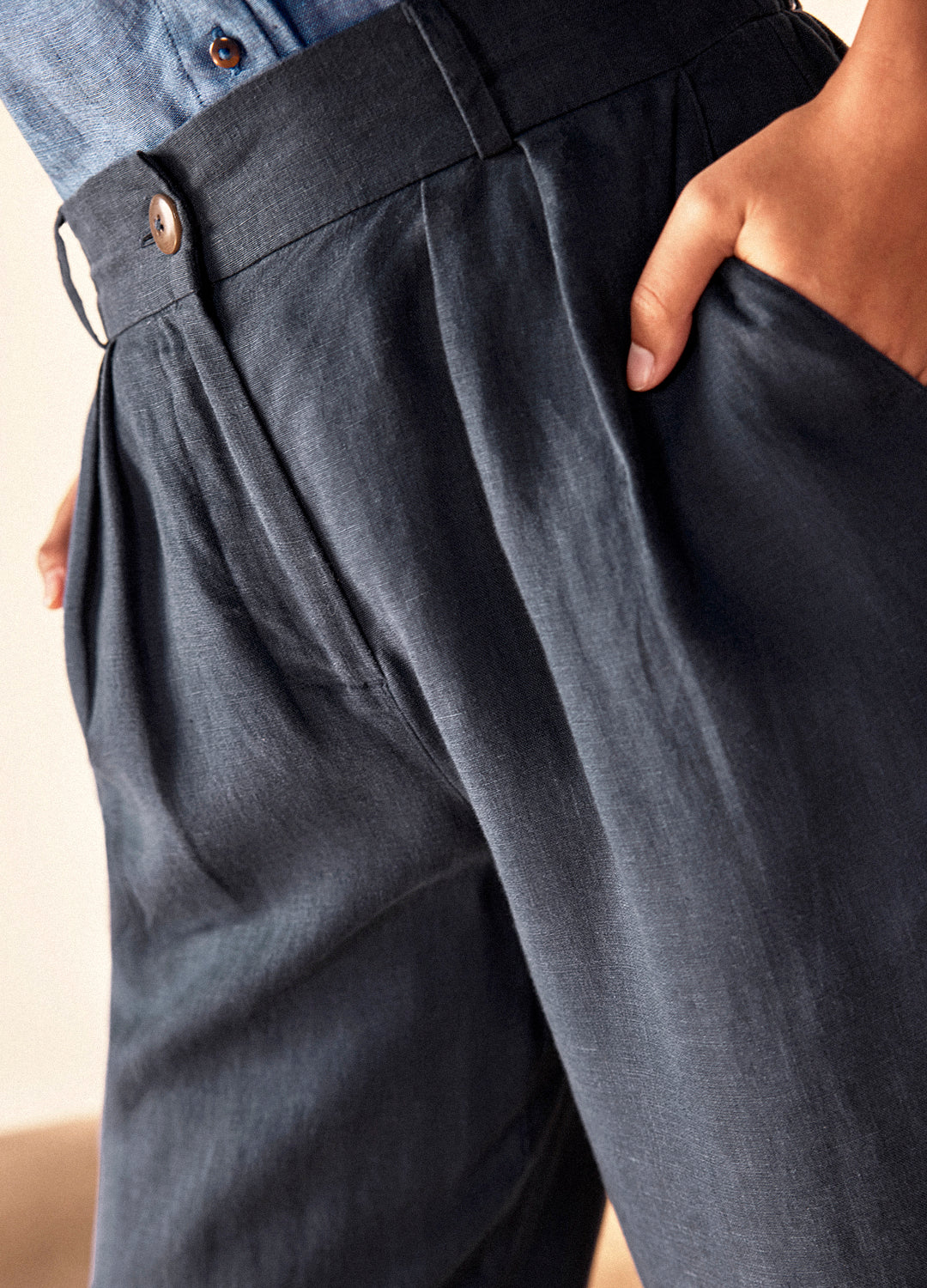
100% Organic: We use only 100% organic cotton and organic linen. This single choice makes the biggest impact of all.
100% Local: All our products are made in India from start to finish. It's 100% local. This reduces our carbon miles - big time.
100% Vegan: No leather, no wool, no fur, just cotton & linen. Not using animal products reduces greenhouse gas emissions. (And is just the kind thing to do too, no?)
Zero-Waste Approach: We use a lot of fabrics left over by other brands in our factories to make new clothes - over 50% of our styles are from overstock!. Reduces waste, reduces emissions!
Compostable Packaging: Our packaging is made from recycled, recyclable and compostable materials. No poly-bags here, no thank you.
Renewable Energy: Our website is fuelled by solar & wind energy. Parts of our factories are too. We hope to say goodbye to all fossil fuels in the near future, as and when those options arise.
What does all this add up to? A low, low footprint!
First, we measure the carbon footprint of every No Nasties product across 2 stages:
1. Farm & Factory: From raw materials to manufacturing.
2. Transportation: From farm to factory to warehouse to you.
We then compensate for the total footprint of the product through offsets.
No Nasties invests in certified offset projects for solar power, wind energy, forest protection & replanting.
In the hierarchy of climate action, the first and most effective option is almost always to reduce emissions. (In other words, rather than buying offsets for your flight, see if you can avoid that flight entirely.)
But many companies use offsets as an excuse to not focus on reducing their footprint. Not us though - we have always reduced emissions first, since Day 1 of No Nasties. But some emissions are unavoidable, and offsets are a powerful tool to compensate for those.
None of this is to say that funding projects to protect natural ecosystems or deploying clean energy are bad. It’s just that doing so doesn’t exonerate the buyer for their contributions to climate change. All else being equal, it is better to buy an offset than to do nothing.
Our motto: Emit less, balance the rest.
An analogy: If you are trying to lose weight, you count your calories. Calories out > calories in = weight loss. That's the formula, albeit simplified.
Now replace calories with CO2.
Of course, making & shipping clothes creates CO2 and has a negative impact on the planet. But how much impact exactly? Can we measure it? Reduce it and even compensate for it?
And what if we more than compensate - would it actually have a net positive impact? Yes! And that's exactly what we are doing.
We remove more CO2 than we create, to have a net positive impact on the planet.
The carbon footprint is the "calories in" and the carbon offsets are the "calories out". And we offset 300% of the footprint. AND additionally plant 3 trees for every product you buy too, for good measure!
Couple of key points:
1) As they say, you can’t out-train a bad diet. We must always start with reducing our footprint, which we have always done with our 100% organic cotton, vegan, fair trade, local supply chain.
2) While No Nasties minimises the negatives in our supply chain, the positive impact happens ONLY when you make a purchase. That’s when the offsets and the tree planting actually happens. We make it "less negative", you make it "planet positive".
Another analogy: The climate crisis is like being on a raft on a river, rapidly heading towards a huge, deadly waterfall. You would want to not only slow down the raft, but stop it and ideally reverse it too, right? Move away from that fall.
Buying fast fashion is speeding up. Buying slow fashion is slowing down. Not buying at all is stopping (but the river is still carrying the raft forward). Buying planet positive is reversing!
The best case scenario would be to not buy anything AND invest your money in carbon offsets and tree planting to help remove CO2 from the air. By all means, do that! But if/when you need to buy clothes, make sure it's a #planetpositive purchase.

the math
Backed by Data. Shared Transparently.
We commissioned Green Story to perform a third-party Life Cycle Analysis factoring in the supply chain, material composition, and fabric consumption for each product we make. See the Life Cycle Analysis.
The analysis breaks down our impact across key metrics associated with ALL the stages of our product’s life. These are modelled by Green Story using appropriate methodology such as ISO 14040 and sourced from pre-existing lifecycle inventory reports & databases.
We then map each & every No Nasties product to get its impact metrics (ie: carbon footprint + water usage + emissions savings).
Easy breezy? Nope.
Necessary? Absolutely!
Our approach is based on global industry numbers & algorithms to get to an accurate estimate of a product's impact.
Having said that, there are internationally accepted assumptions & averages used for these calculations. Another reason we don't offset just 100%, but 300% of the footprint to make sure we are well into the positive, and far away from any greenwashing claims.
We use third-party verified offset projects with fully transparent accounting in a carbon registry that shows each & every offset purchase we make.
Over the years, we have partnered with several tree planting organisations and by now have planted 261846trees all over the world
1) With grow-trees.com, we have planted 18,397 trees across India.
2) With ecologi.com, we have planted 17,715 trees, mostly mangroves in Madagascar.
3) With simplizero.com, we planted trees with Eden Reforestation Projects, mostly in mangroves in Mozambique & Madagascar.
4) Since 2024, we have started planting trees in Senegal, Africa with Veritree who provide verified, on-the-ground impact data.
5) In addition to these, our offset projects have also contributed to reforestation and avoided deforestation in the Amazon rainforests in Brazil and Peru.
We choose tree planting partners who work alongside local communities and plant local, indigenous tree varieties. Cue environmental AND social impact!
Yes!
1) Organic cotton + fairtrade supply chains cost a lot more than your high-street fast fashion clothes. Certifications and licensing for the same are a pretty penny too!
2) Investing in carbon offsets, while fairly affordable right now, adds up too - especially when we are offsetting 300%.
3) Planting trees - thousands of them - costs us thousands & thousands too.
But hey, clothes that save the planet!? That's a great deal.
We don't charge anything extra for all the carbon offset & tree planting investments to be #planetpositive - it comes from our margins and our profits. Our product prices remain the same as before.
Money, meet mouth!
We don’t see global consumerism in its harmful form going away anytime soon, but being #planetpositive is the right intention, the right direction and the right action to take. Where every purchase we make on the planet has a positive impact for the planet.
And if every company in the world were carbon-negative & planet-positive, we’d see unprecedented investment into climate solutions. Investments at a scale that could restore the climate.
And that would be a bright sunny day for all of us, no?
Founder, Apurva Kothari
What do you think?
We've shared our approach. What's yours? Talk to us.